
From demonstration to deployment.
Surgical Robotics, Humanoid Power and Motion Systems
Surgical robotics funding and a humanoid charging announcement lead this edition, alongside startup support and motion engineering. These reports describe commercial plans and component offerings, with limited evidence about performance in operating environments.
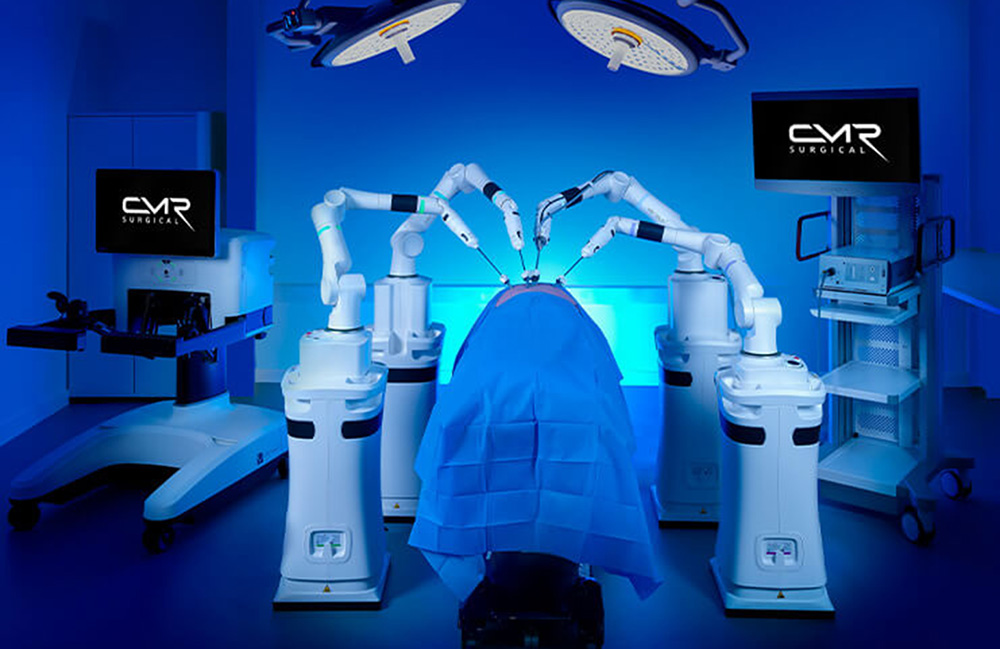
The Robot Report reports that Stryker is investing $400 million in CMR Surgical. Stryker also plans to become the exclusive U.S. sales agent for CMR's Versius surgical robotics portfolio.
Our take For U.S. surgical teams evaluating Versius, the planned sales arrangement is a commercial development to follow. The investment and distribution plan do not establish clinical performance; procedure-specific evidence remains a separate purchasing consideration.
The Robot Report · Source published
Read the source at The Robot Report (opens in a new tab)The Robot Report says Agility has selected Nyobolt power technology for its Digit 5 humanoid. The announcement claims the charging technology enables the robot to work for up to 20 hours daily.
Our take For operators considering long workdays, the charging arrangement makes the relationship between charging and task time worth examining. The announced daily operating claim needs a documented task schedule and charging conditions before it can guide deployment planning.
The Robot Report · Source published
Read the source at The Robot Report (opens in a new tab)The Robot Report describes Analog Devices' Emerging Tech Hub as an offering for robotics startups. The article presents it as support for businesses keeping pace with technical developments while scaling.
Our take For a startup moving a robot toward a larger rollout, the useful question is which engineering bottleneck the hub can address. The report describes a support offering, without establishing a particular robot's deployment results.
The Robot Report · Source published
Read the source at The Robot Report (opens in a new tab)The Robot Report describes Timken Precision Drives' approach to humanoid motion systems. Timken combines expertise from Cone Drive, SPINEA, CGI Motion and Timken Encoders to develop systems tailored to particular applications.
Our take For humanoid designers, application-specific motion systems make the intended movement a starting point for component evaluation. Assessing usefulness would require results for the relevant joint motion and load; the report does not establish a deployed humanoid's performance.
The Robot Report · Source published
Read the source at The Robot Report (opens in a new tab)